

Ever wondered how those amazing, moving dinosaurs in movies or theme parks come to life? It’s not just movie magic; it’s the result of some clever engineering and artistic skill. If you’ve ever thought about building your roaring, stomping creature, you’re in the right place. This guide will walk you through how to make an animatronic dinosaur, from the very first idea to the final, impressive display.
Key Takeaways
- Animatronics combine art and engineering to create moving figures.
- Careful planning and design are important before building anything.
- Choosing the right materials helps make your dinosaur strong and look real.
- Building the skeleton and adding motors is a big part of the process.
- Programming movements makes your animatronic dinosaur come alive and interact.
Understanding Animatronic Dinosaur Fundamentals
Defining Animatronics for Your Project
So, you want to build an animatronic dinosaur? That’s awesome! First, let’s get on the same page about what “animatronics” actually means in this context. It’s not just a fancy robot. Think of it as bringing a static model to life through mechanical and electronic systems. We’re talking about creating a realistic illusion of movement and even sound. This means figuring out what kind of movements you want your dinosaur to make. Will it just blink, or will it roar and stomp around? The complexity of your vision directly impacts the design and engineering involved. At Cinemagic Workshop, we’ve seen all sorts of ideas, from simple head turns to full-body simulation dinosaurs that make you feel like you’re in Jurassic Park.
Exploring Core Animatronic Principles
Building an animatronic dinosaur involves a few key principles. It’s a blend of art and engineering. You’ve got the mechanical side, which is all about the skeleton and the moving parts. Then there’s the electronic side, which controls those movements. And finally, the artistic side makes it look like a real dinosaur. It’s like a puppet, but instead of strings, you’re using motors and sensors. Understanding how these pieces work together is super important. We often break it down into these areas:
- Mechanics: This includes the frame, joints, and the actuators (like motors or hydraulics) that make things move.
- Electronics: This covers the control boards, wiring, and power supply that tell the mechanics what to do.
- Programming: This is where you choreograph the movements, making them smooth and lifelike.
- Sculpting and Finishing: This is the skin, texture, and paint that give your dinosaur its realistic appearance.
It’s easy to get caught up in the cool factor of animatronics, but remember, every great animatronic starts with a solid understanding of how all its parts work together. It’s a bit like building a house; you need a strong foundation before you can add the fancy decorations.
Safety Considerations in Animatronic Design
Alright, let’s talk about safety. This isn’t just a suggestion; it’s a must. When you’re dealing with moving parts, electricity, and potentially heavy structures, things can go wrong if you’re not careful. Safety should be at the forefront of every design decision you make. Think about where your dinosaur will be placed and who will interact with it. Will kids be around? Will it be outdoors? These factors change your safety requirements. For example, you’ll need to consider:
- Pinch Points: Make sure there are no places where fingers or clothing can get caught.
- Electrical Hazards: Proper insulation and grounding are non-negotiable.
- Structural Stability: Your dinosaur needs to be stable and not tip over, especially if it’s large.
- Emergency Stops: Always have a way to quickly shut down the system if something goes wrong.
At Cinemagic Workshop, we take safety very seriously. Our animatronics are built to strict standards, and we always recommend consulting with professionals, especially for larger projects. It’s better to be safe than sorry, right?
Designing Your Animatronic Dinosaur
Choosing the Right Structural Components
When you’re building an animatronic dinosaur, the skeleton is the backbone, literally. You need materials that can handle all the movement and stress without breaking down. Think about what your dinosaur will be doing. Is it just standing there, or will it be moving its head, tail, and legs a lot? The more movement, the stronger your frame needs to be. Steel and aluminum are often the go-to choices for the main frame because they’re strong and can be shaped. Steel is super tough, great for big, heavy parts, but it can be, well, heavy. Aluminum is lighter, which is good for smaller parts or if you need to keep the overall weight down. You might also use some specialized plastics, especially for joints or areas where you need a bit more flexibility. It’s all about finding that sweet spot between strength and weight.
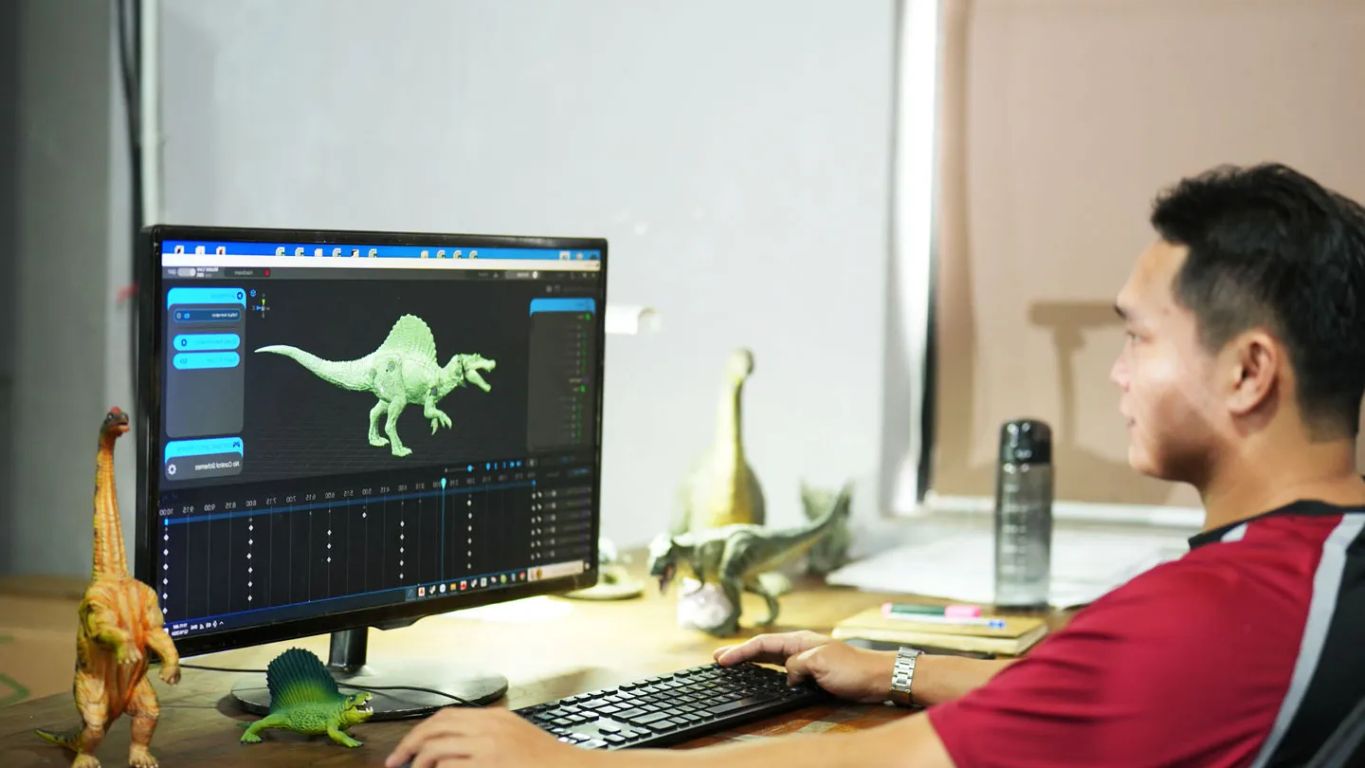
Designing Your Animatronic Dinosaur
Picking the right materials for your animatronic’s internal structure is a bit like choosing the right bones for a real dinosaur. You want something that’s going to last, something that can take a beating, but also something that allows for natural, fluid motion. It’s a balance, and getting it right early on saves a lot of headaches later.
Here’s a quick look at some common structural materials:
- Steel: Very strong, good for heavy loads, but can be heavy and might need rust protection.
- Aluminum: Lighter than steel, still strong, good for reducing overall weight, but can be more expensive.
- PVC/ABS Plastics: Useful for lighter, non-load-bearing parts or for creating custom shapes easily.
Utilizing Advanced Skin and Texture Materials
Once you have your skeleton, you need to give your dinosaur some skin. This is where realism comes into play. You’re not just looking for something that looks good; it needs to feel right and hold up over time. Silicone and latex are popular choices because they’re flexible and can capture fine details. They can also be painted to look incredibly lifelike. For larger areas, you might use foam latex or even some specialized fabrics that can stretch and move with the animatronic’s frame. The goal is to make it look like real skin, with all the wrinkles, scales, and textures you’d expect from a dinosaur. Companies like Amodinos have pushed the boundaries here, creating materials that are not only realistic but also incredibly durable, even for outdoor displays.
Consider these factors when choosing skin materials:
- Flexibility: How much will the skin need to stretch and compress with movement?
- Durability: Will it withstand repeated movement, environmental factors, and handling?
- Detail Capture: Can it hold the fine textures and sculpts you’ve designed?
- Paint Adhesion: Will paint stick to it and last without cracking or peeling?
Incorporating Eco-Conscious Material Choices
In today’s world, thinking about the environment is a big deal, even when you’re building a dinosaur. More and more, people are looking for ways to make things that are less harmful to the planet. This means looking for materials that are recycled, recyclable, or come from sustainable sources. It’s not always easy, especially with specialized animatronic components, but it’s a growing area. For example, some companies are experimenting with bio-plastics or using reclaimed metals for structural parts. It’s a challenge, but it’s also a chance to innovate and show that you can create amazing things while still being responsible. CineMagic Workshop, for instance, has been a leader in exploring these kinds of options, showing that high-quality animatronics can also be made with an eye towards sustainability. Their work on Jurassic Park animatronics set a standard for what’s possible.
Here are some eco-conscious material considerations:
- Recycled Content: Using materials that have been made from recycled waste.
- Recyclability: Choosing materials that can be recycled at the end of the animatronic’s life.
- Sustainable Sourcing: Opting for materials from responsibly managed forests or other renewable resources.
- Low VOC Paints/Adhesives: Reducing harmful chemical emissions during construction and operation.
Building the Animatronic Dinosaur Skeleton
Constructing the Internal Frame
Building the internal frame for your animatronic dinosaur is a big step. This frame is the backbone of your creation, so it needs to be strong and precise. Think of it like the bones of a real dinosaur, but made from metal or other tough materials. You’ll want to use materials that can handle the weight of all the components and the stress of movement. Aluminum and steel are common choices because they’re both strong and can be shaped pretty well. You might also consider carbon fiber for lighter, yet still very strong, structures, especially for smaller or more agile designs. The frame needs to support everything, from the motors to the skin, so planning is key. Make sure your design accounts for all the forces it will experience.
Integrating Robotic Components and Actuators
Once the frame is ready, it’s time to add the robotic parts. This is where your dinosaur starts to come alive. Actuators, like motors and hydraulic cylinders, are what make the dinosaur move. You’ll need to pick the right type and size of actuator for each joint, depending on how much power and speed you need. For example, a large leg joint will need a much stronger actuator than a small eye movement. Placing these components correctly is important for smooth, natural motion. You also need to think about how they connect to the frame and to each other. It’s a bit like building a complex machine, where every part has a specific job and fits together just right. For complex projects, you might even consider working with a company that specializes in custom animatronic dinosaurs to ensure all components are perfectly integrated.
| Actuator Type | Common Use | Pros | Cons |
|---|---|---|---|
| Servo Motors | Small, precise movements (eyes, fingers) | Accurate, relatively quiet | Limited power, can be slow |
| Stepper Motors | Controlled rotation (gears, turntables) | Precise positioning, good torque at low speeds | Can lose steps, less smooth at high speeds |
| Hydraulic Cylinders | Large, powerful movements (legs, neck) | High force, smooth motion | Requires hydraulic pump, can be messy |
| Pneumatic Cylinders | Quick, on/off movements (jaw snap) | Fast, simple | Less precise, can be noisy |
Building the skeleton is a careful process. It’s not just about putting pieces together; it’s about creating a foundation that will allow your dinosaur to move realistically and safely. Every connection, every joint, and every component placement matters. Taking your time here will save you a lot of trouble later on.
Wiring and Sensor Placement for Movement
Wiring and sensor placement are the nervous system of your animatronic dinosaur. This is how the brain (your control system) communicates with the muscles (the actuators) and receives information about the world around it. You’ll need to run wires for power to all your motors and actuators, and signal wires for your sensors. Sensors, like potentiometers or encoders, tell you the exact position of each joint, which is super important for controlling movement accurately. Think about where you’ll put these sensors so they can get good readings without getting in the way. Also, make sure your wiring is neat and protected. Loose wires can cause all sorts of problems, from short circuits to unreliable movements. It’s a good idea to label everything clearly, too, so you know what’s what when you’re troubleshooting or making adjustments. Cinemagic Workshop, for instance, has years of experience in this area, ensuring their creations are not only visually stunning but also mechanically sound and reliable.
Crafting the Lifelike Exterior
Sculpting Realistic Dinosaur Features
Once the internal structure is complete, the real artistry begins: sculpting the dinosaur’s exterior. This step is where your animatronic truly starts to take on a lifelike appearance. You’ll be working with various materials to build up the form, focusing on anatomical accuracy and expressive details. Think about the muscle definition, the subtle curves of the body, and the way light would hit different surfaces. It’s a process of layering and refining, much like a traditional sculptor would approach a clay model, but with an eye toward how these forms will interact with the underlying mechanics. Getting the proportions right is key to making your dinosaur believable.
Here are some common materials used for sculpting:
- Foam: Various densities of foam (like polyurethane or EVA foam) are often used for the initial bulk and shaping. They are lightweight and easy to carve.
- Clay/Epoxy Putty: For finer details, such as facial features, claws, or scales, a modeling clay or epoxy putty can be applied over the foam base. These materials allow for precise shaping and hold their form well.
- Fiberglass: For larger, more rigid sections, fiberglass can be molded over a sculpted form to create a durable shell.
Applying Textures and Coloration for Authenticity
After the basic form is sculpted, adding texture and color brings the dinosaur to life. This isn’t just about painting; it’s about creating a surface that feels real to the touch and looks natural under different lighting conditions. Consider the type of skin your dinosaur would have – scaly, leathery, wrinkled? Each texture requires a different approach. For example, you might use specialized tools to impress scale patterns or build up layers to create a rough, reptilian feel. When it comes to color, research real-world reptiles or paleontological interpretations to guide your palette. Think about subtle variations in tone, shading to emphasize contours, and even small imperfections that add to the realism. This is where the creature truly gains its personality.
The goal here is not just to make it look like a dinosaur, but to make it look like a living, breathing creature. Every bump, every wrinkle, and every shade of color contributes to that illusion. It’s a meticulous process, but the payoff is an animatronic that truly captivates.
Adding Finishing Touches for Hyper-Realism
The final stage involves those small, yet impactful, details that push your animatronic from good to truly amazing. This includes things like adding realistic eyes, which can be custom-made or sourced from specialized suppliers. Think about the pupil shape, the iris color, and even a slight gloss to mimic moisture. Teeth and claws also need careful attention; they should look sharp, worn, or even broken in places, depending on the dinosaur’s imagined life. Small details like scars, dirt, or even subtle veins can add layers of authenticity. This is where the craftsmanship of a company like CineMagic Workshop shines, as they are known for their hyper-realistic creations. It’s these minute details that trick the eye and make people believe they are looking at something truly ancient and alive. The overall cost of animatronic dinosaurs can be influenced by the level of detail and realism achieved in these finishing touches.
Programming Movement and Interaction
Bringing an animatronic dinosaur to life means more than just building it; it means teaching it to move and react in ways that feel real. This part is where the magic happens, turning a static model into something that can surprise and delight. It’s a mix of careful planning and a bit of trial and error to get everything just right.
Developing Motion Sequences for Dynamic Poses
Creating motion sequences is like choreographing a dance for your dinosaur. You’re not just making it move; you’re telling a story with its actions. Think about what emotions or behaviors you want to convey. Is it a gentle giant grazing, or a fierce predator on the hunt? Each movement, from a subtle head tilt to a powerful tail swing, needs to be programmed with precision.
- Start with basic movements: Begin by programming individual joints and actuators. Get the head to turn, the jaw to open, or a leg to lift. This helps you understand the range of motion for each part.
- Combine movements into sequences: Once you have the basics down, start linking them together. A sequence might involve the dinosaur looking around, then lowering its head to
Testing and Refinement for Optimal Performance
Building an animatronic dinosaur is a big project, and getting it just right means a lot of testing and tweaking. It’s like baking a cake; you can follow the recipe perfectly, but you still need to taste it and adjust the sugar or spices to make it truly delicious. For animatronics, this stage is where your dinosaur comes to life, moving and interacting exactly as you imagined.
Conducting Comprehensive Functionality Tests
Once your animatronic dinosaur is assembled, the first thing you need to do is run a bunch of tests. Think of it as a full physical exam for your dino. You’re checking every single part to make sure it works. This means testing each motor, every sensor, and all the joints. You want to make sure the range of motion is what you planned and that there are no weird hitches or grinding sounds. It’s also a good idea to test the power supply and make sure it’s stable. We usually start with individual component tests, then move to small sequences, and finally, full motion programs. This systematic approach helps pinpoint any issues early on.
- Check individual motor function and range of motion.
- Verify sensor input and responsiveness.
- Test power distribution and stability.
- Run short, isolated movement sequences.
- Monitor for unusual noises or vibrations.
This phase is all about making sure the mechanics are sound. You’re looking for any weak points or areas that might cause problems down the line. It’s better to find these things now, in your workshop, than when your dinosaur is on display.
Troubleshooting and Adjusting Mechanical Systems
No matter how well you plan, you’re probably going to run into some snags during testing. That’s normal. This is where you put on your detective hat and figure out what’s going wrong. Maybe a joint is sticking, or a motor isn’t getting enough power. Sometimes, it’s a simple fix, like tightening a screw or rerouting a wire. Other times, you might need to adjust the programming or even redesign a small part. It’s a back-and-forth process of identifying the problem, trying a solution, and then retesting. Patience is key here. At Cinemagic Workshop, we’ve seen it all, from minor glitches to major overhauls, and we know that every adjustment makes the final product better. Our animatronic models are a testament to this iterative process.
Ensuring Long-Term Durability and Safety
Beyond just working, your animatronic dinosaur needs to be built to last and, most importantly, be safe. This means thinking about things like wear and tear on moving parts, how the materials will hold up over time, and what happens if something goes wrong. You want to make sure there are safety cut-offs for motors and that all electrical components are properly insulated. Consider the environment where the dinosaur will be. Will it be exposed to dust, moisture, or extreme temperatures? These factors can affect durability. A well-tested animatronic isn’t just functional; it’s reliable and safe for everyone around it. We also think about maintenance schedules and how easy it will be to service the dinosaur in the future. This forward-thinking approach is part of what makes our animatronic projects stand out.
| Test Type | Purpose | Frequency | Expected Outcome |
|---|---|---|---|
| Stress Test | Evaluate component resilience under load | Weekly | No visible wear or performance degradation |
| Endurance Test | Assess long-term operational stability | Monthly | Consistent movement and responsiveness |
| Safety Protocol Check | Verify emergency stop and fail-safes | Bi-weekly | Immediate and reliable system shutdown |
To truly make things work great, you need to test them and make them better. It’s like trying out a new game and then changing how you play to win more. Want to see how we do this? Check out our website!
Wrapping Up Your Animatronic Adventure
So, there you have it! Making an animatronic dinosaur might seem like a huge task, but hopefully, this guide has broken it down into steps that feel doable. It’s a mix of art and smarts. You get to be creative, but also figure out how things work. And that’s pretty cool. If you’re thinking about getting into animatronics, just start small. You’ll learn a lot along the way. And hey, if you ever need a hand with bigger projects, or just want to see some amazing animatronics, check out Cinemagic Workshop. They’re based in Vietnam and do some incredible stuff, making super-real-looking animatronics for all sorts of places. They know their stuff when it comes to bringing these creatures to life. So, go on, give it a try, and have fun building your dino!
Read more: Trusted Animatronics Manufacturer for Global Theme Parks and Exhibitions